Beam Math
Based on the first two pages of Fred
Martin's paper "The Art of LEGO Design"
Connecting Beams
Together
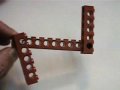 Let's suppose that we want to connect two beams together at a
firm right angle. Using the grey connector peg (left) the connection won't be
firm at all. The beams will be connected, yet able to swing around freely. Using
the black connector peg (right), the connection is a little bit
tighter.
Let's suppose that we want to connect two beams together at a
firm right angle. Using the grey connector peg (left) the connection won't be
firm at all. The beams will be connected, yet able to swing around freely. Using
the black connector peg (right), the connection is a little bit
tighter.
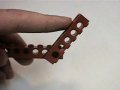 Even with the black peg, though, a push on one of the beams
ruins the right angle.
Even with the black peg, though, a push on one of the beams
ruins the right angle.
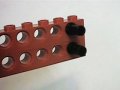 Here's a thought that one teacher had: what about stacking beams
on top of each other and using two connector pegs? Surely it will be a
firmer connection then. The idea seemed good in theory, but when you try to
connect beams this way, the holes don't quite line up. Why? Let's investigate
LEGO spacings a bit to find out.
Here's a thought that one teacher had: what about stacking beams
on top of each other and using two connector pegs? Surely it will be a
firmer connection then. The idea seemed good in theory, but when you try to
connect beams this way, the holes don't quite line up. Why? Let's investigate
LEGO spacings a bit to find out.
Spacings
 It takes three LEGO plates stacked together to equal the height
of a LEGO beam.
It takes three LEGO plates stacked together to equal the height
of a LEGO beam.
 It only takes two and a half plates to equal the width of a LEGO
beam.
It only takes two and a half plates to equal the width of a LEGO
beam.
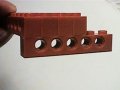 The distance between two adjacent holes in a beam is the same as
the width of a beam or brick, or in other words two and a half
plates.
The distance between two adjacent holes in a beam is the same as
the width of a beam or brick, or in other words two and a half
plates.
 The distance between two centers of two holes vertically (when
two beams are stacked on top of each other) is equal to the height of a LEGO
beam, or three plates. It might take a minute to convince yourself that this is
true regardless of whether or not the holes are in the center (they
aren't!).
The distance between two centers of two holes vertically (when
two beams are stacked on top of each other) is equal to the height of a LEGO
beam, or three plates. It might take a minute to convince yourself that this is
true regardless of whether or not the holes are in the center (they
aren't!).
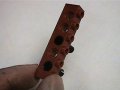
This means that if you want to connect two beams together with
connector pegs at a right angle to each other, you will discover that you can't
do it with just three beams and two connector pegs alone... The space between
the two holes vertically, remember, is a unit of height, or three plates. The
space between the two holes along the beam that you want to place in a vertical
position over the two pegs is a unit of width, or two and a half plates. I've
seen people try and try to get beams to lock together this way. Some of them
succeed, but only after badly bending the LEGO beams!
 Well, we know that we cannot connect two beams together at a
right angle using the two adjacent holes along the beam. What about two holes
that are two units of width (5 plates) apart? Could we do that?
Well, we know that we cannot connect two beams together at a
right angle using the two adjacent holes along the beam. What about two holes
that are two units of width (5 plates) apart? Could we do that?
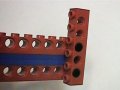 Yes! If we add two plates in the middle of the two beams, we
then have 5 plates worth of space between the holes (before adding the two
plates in between we had one unit of vertical space or 3 plates worth of space)
- which is exactly the amount of space between the holes in the beam that are
two holes apart! (Remember: each hole along the vertical beam is two and a half
plates apart, 2 X 2.5 = 5)
Yes! If we add two plates in the middle of the two beams, we
then have 5 plates worth of space between the holes (before adding the two
plates in between we had one unit of vertical space or 3 plates worth of space)
- which is exactly the amount of space between the holes in the beam that are
two holes apart! (Remember: each hole along the vertical beam is two and a half
plates apart, 2 X 2.5 = 5)
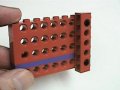 Why does this spacing work?

 Even with the black peg, though, a push on one of the beams
ruins the right angle.
Even with the black peg, though, a push on one of the beams
ruins the right angle. Here's a thought that one teacher had: what about stacking beams
on top of each other and using two connector pegs? Surely it will be a
firmer connection then. The idea seemed good in theory, but when you try to
connect beams this way, the holes don't quite line up. Why? Let's investigate
LEGO spacings a bit to find out.
Here's a thought that one teacher had: what about stacking beams
on top of each other and using two connector pegs? Surely it will be a
firmer connection then. The idea seemed good in theory, but when you try to
connect beams this way, the holes don't quite line up. Why? Let's investigate
LEGO spacings a bit to find out. It takes three LEGO plates stacked together to equal the height
of a LEGO beam.
It takes three LEGO plates stacked together to equal the height
of a LEGO beam. It only takes two and a half plates to equal the width of a LEGO
beam.
It only takes two and a half plates to equal the width of a LEGO
beam. The distance between two adjacent holes in a beam is the same as
the width of a beam or brick, or in other words two and a half
plates.
The distance between two adjacent holes in a beam is the same as
the width of a beam or brick, or in other words two and a half
plates. The distance between two centers of two holes vertically (when
two beams are stacked on top of each other) is equal to the height of a LEGO
beam, or three plates. It might take a minute to convince yourself that this is
true regardless of whether or not the holes are in the center (they
aren't!).
The distance between two centers of two holes vertically (when
two beams are stacked on top of each other) is equal to the height of a LEGO
beam, or three plates. It might take a minute to convince yourself that this is
true regardless of whether or not the holes are in the center (they
aren't!). Well, we know that we cannot connect two beams together at a
right angle using the two adjacent holes along the beam. What about two holes
that are two units of width (5 plates) apart? Could we do that?
Well, we know that we cannot connect two beams together at a
right angle using the two adjacent holes along the beam. What about two holes
that are two units of width (5 plates) apart? Could we do that? Yes! If we add two plates in the middle of the two beams, we
then have 5 plates worth of space between the holes (before adding the two
plates in between we had one unit of vertical space or 3 plates worth of space)
- which is exactly the amount of space between the holes in the beam that are
two holes apart! (Remember: each hole along the vertical beam is two and a half
plates apart, 2 X 2.5 = 5)
Yes! If we add two plates in the middle of the two beams, we
then have 5 plates worth of space between the holes (before adding the two
plates in between we had one unit of vertical space or 3 plates worth of space)
- which is exactly the amount of space between the holes in the beam that are
two holes apart! (Remember: each hole along the vertical beam is two and a half
plates apart, 2 X 2.5 = 5) Why does this spacing work?